July 9, 2015

6/24/15 - April Book

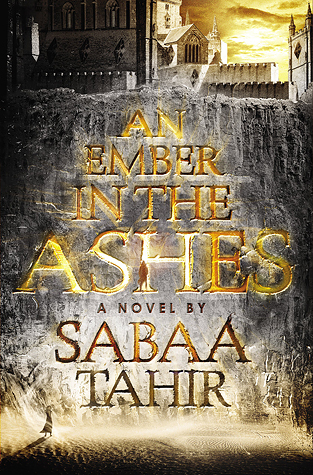
Are you ready for a rant, kids? Because that's what we're getting for the April Book review!


I already wrote a full review on my Goodreads page, so I'm just going to give you a few of the highlights. If you want to read it, go check it out! (And friend me, too! I can never have too many reading buddies.)

Maybe it's because I'm a huge character person - I could not care less about plot as long as the characters are delightful - but nothing about these characters made me root for them. At all. Elias is a whiny, self-righteous pig 90% of the time and I have no idea who he's supposed to be the other 10% of the time; Laia is like a sheet of cheap watercolor paper that you accidentally sprayed too much water on and now your floor is wet and it's all disgusting and floppy and even when it looks right it looks... wrong, and when you try to paint on it to make it pretty, it looks like inappropriate body parts. Keenan - who the heck is Keenan? He has red hair, I can tell you that. And he's got some kind of pain. Because... ??????????????????? Helene was the best character in the entire book - a tough survivor with a general's brain, sort of like a leveled-up Annabeth Chase. But she still gets sidelined as the Incomprehensible Beautiful Single Female in a crowd of BOOOOYYYZZZZZZZZ and Tahir never. lets. us. forget. that. she. is. a. female. You would think Helene was a mop of shining beautiful curling silver-blond hair on a broomstick, from all her descriptions.

Helene's treatment makes me particularly angry. This is the closest thing to a real character that we have in the book - a good, well-rounded character, with thoughts and motivations of her own - and yet she is constantly downgraded to nothing but her gender. The flippant and casual threats of rape are tossed around her just as much as they are around Laia, a slave girl. One of her major conflicts is dealing with a psychotic rapist antagonist, and yet Helene - a girl literally raised for violence, courage, and hardness - is reduced to fear and cringing? BULLCRAP. Her "pretty blonde hair" makes her less intimidating when she's furious? BULLCRAP! She gets hormonally jealous of a slave girl when Elias is 20 years old and has probably been fooling around with slaves and prostitutes for years? 
+++ 

It's all the same shtick we've been forcefed for 10+ years. It's the "I see sparks fly" line from the T-Swizzle song set on repeat for seven hours. For all the attempts that are made in the name of Beauty and the Beast, in the name of "love comes from the inside," all I hear is a lot about how beautiful Laia is (she has to cover herself up with a cloak or else she'll get raped) and about how strong Elias is. Laia can apparently see the "hard lines of Elias's stomach" even while he is clothed and "at a distance," presumably at night at a town festival of sorts. Anatomy, man. It's a conspiracy. 
+++ 
Nothing ever comes of the mythological bent. Some wraiths are part of the Trials that Helene and Elias go through, but Elias doesn't fight them. It sounds like the Commandant (the kick-ass Main Villain who actually WORKS, God bless) has a business agreement with one of the creatures, but that's tacked into a verbal info-dump in the last 100 or so pages and promptly forgotten. And, most inexplicably, Laia is plagued by... fear wraiths? Anxiety wraiths? Guilt wraiths? I don't know. They're just there and they torment her until she just can't bear to hear... words. And she lays screaming on the ground or in corners. I don't know why. I mean, it's not like everyone else in this godforsaken world is free from guilt. Good grief, Laia's wraiths made me want to stab myself because it was so mind-bogglingly unimportant! Nothing came of those flipping wraiths! They made no difference - if you took them out the story would be the same - I'm so angry at those dumb wraiths for causing maybe twenty or thirty extra pages of USELESS ANGST for a character I couldn't care less about! In fact, the wraiths made me hate Laia even more. 
+++ 

BONUS:


I stopped updating at about 70%. My will had left me. It probably goes without saying: I do not recommend this book.

6/22/15 - A Book With Nonhuman Characters

I admit it. I am a Loki fan. But wait, hear me out - before you peg me as a simple crying fangirl (which is hardly the whole truth), let me regale you with the hipster chorus of the centuries: I liked him before he was cool. Or at least before he was Tom Hiddleston (sigh of appreciation); I think Loki has always been cool at the mythological table in the reading cafeteria.

Anyway, a handful of years back, I was way into Norse mythology. I have a ton of books - both Eddas, Padraic Colum's retellings, Kevin Crossley-Holland's retellings, Roger Green's retellings... I was a fan. If there were any story that could make me laugh every time I read it, it was Thrym's Wedding. (Bruce Coville, Thor's Wedding Day. I have it.) I also read Runemarks, which is not a novelization of the web game, but Joanne Harris's middle-grade (but still hefty) story about the Norse gods in the present day. At least, I think it's present-day. Present-ish? Old but not ancient times? Anyway. Harris wrote Loki as a significant side character in that, and, as I recall, he was pretty brilliant.

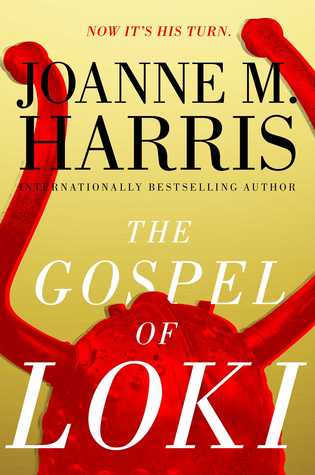
So I was excited when I found out that Harris had a new, adult project coming out that focused primarily on the legendary trickster. With gods and strange Chaos-demons as the main characters, it well fit the category of A Book With Nonhuman Characters.


(If you can, get the first edition cover; it's much nicer than the one I got here in America at the library.)

As I said in the last review, expectation is a significant mood-killer when you're reading something that you've been dying to get your hands on (for over a year, in this particular instance). With The Gospel of Loki, I was expecting something along the lines of Runemarks - a new take on an old tale, a cool new adventure for the old gods. Something unexpected for my Loki passion to chew on for a while.
My experience with Norse retellings, however, came back to bite me. Harris retells the stories of the Norse pantheon from Loki's point of view... with almost no alterations. There is, of course, Loki's larger-than-life personality to account for it, and the look into his brain does cast some small original light onto the events. But, at the end of each chapter, it's just the stories that the Eddas have told and that the others have copied.

Don't get me wrong - Harris can write. And her Loki voice is nothing if not consistent, and consistently tricksterly. There's an amusing blend of archaic and modern, which I know grated on some Goodreads reviewers, but which I found suitable for a god telling his story in the modern day. The book was hardly a pain to read; I enjoyed it, sometimes quite a lot. (I still laughed at Harris's version of Thrym's Wedding.)

But it's a small book, not even 300 pages, and they're almost all dedicated to retellings. 

What I did appreciate was the ending, even if it did skim more than I would have liked. It finally, finally gets at Loki's psyche, the emotions behind his actions during Ragnarok. It was new, it was unique! And then the real ending - wow. That was a good ending, and more than made up for the lack of real punch in the previous chapters.

So, all in all, it's a recommendation. If you're for Norse mythology, have at it! If you're not so much for Norse mythology but want to attempt it, have at it; this is not the worst place to start. If you love Loki, have at it! Really, just have at it. Don't set your originality hopes too high, but otherwise, have at it.

6/18/15 - May Book

Due to complications with the reading schedule, you get the May Book review before you get the April Book review. Surprise!

Take a story with a fascinating premise, the promise of graphic novel panels as well as ordinary novel pages, and then give it a title like I Am Princess X, and you have instantly raised the expectations for your story.


Look at that cover! So modern, so in-your-face, so rad. I've heard of Cherie Priest, though I've not yet read any of her books. I'm working on that. I know she writes mainly for adults, so I'm holding out the hope that her adult work is better. Because, sadly, Princess X was a bit of a let-down.

I expected something QUIRKY with capital letters, something atmospheric and mysterious and engaging - something like a more polished version of The Kneebone Boy, maybe. If you don't know the gist of the story, you should check out Goodreads's summary. But, as it turns out, I Am Princess X is more like a simple mystery-slash-scavenger-hunt than a vaguely postmodern experimental story. Spoiler alert: there aren't even any supernatural/paranormal aspects to it! Sad day. 

Sometimes resisting the call of "supernatural explanation" is very, very good for stories. Dragging in the paranormal can easily turn into getting an easy out. But the thing is, I don't think it would have been, for this story. The graphic novel part of the book, the comics that the MC and her missing best friend, has an incredible dark fairytale feeling to it; the art is good, the storyline is better, and the elements of the tale are the best. Creative, striking the perfect balance between unique and traditional - I loved these sections of the story.

But none of the story actually translated to the real-world mystery, except in the most mundane of ways. That was the biggest letdown.

Maybe it's my fault that I didn't enjoy the story more. Expectation is often the biggest killer in a book-reader relationship. But something in me still says that the story could have been more. You know that feeling you get when you're watching The Wizard of Oz and they pull back the curtain, and there, instead of a GRAND AND MAGNIFICENT WIZARD, it's just a little old man in a phonebooth?

Yeah. I Am Princess X is that little old man. Read it for the graphic novel; leave the curtain untouched.

6/17/15 - A Book Over 500 Pages Long

I had planned on reading Les Miserables for this one, because that's the longest book I can see myself reading, even during the summer. My attention span is not what it used to be.

Then I picked up The Stand, which I had gotten at a charity booksale for 25 cents. Understandably for a 25-cent book, it's small - a cheap early 90s paperback of the variety you'd see in the FREE bin at the library instead of the sale shelves. I underestimated the sheer size of its contents.

My copy of The Stand is just over 800 pages long.


The Stand is, to me, a shining example of why the post-apocalyptic book scene - mostly in YA, since that's my corner, but probably in adult fiction, too - sucks. Okay? It does. It sucks. You wanna know why? Because no one wants to write good post-apocalyptic books. You wanna know why? Because they have to be 800 pages long. After they've been excised by publishers. 

And very few people want to write a 1,100-page book. You see 500-page books not infrequently - good gosh, I don't want to think about how bleeding long Divergent was - but that's pretty much the maximum. Five hundred pages are when all normal, healthy brains start smoking out and sending off "we need a climax" signals.

No one has ever said that Stephen King has a normal, healthy brain.

And that's good! Because The Stand is what we need. We need a good example of post-apocalyptic fiction done, in the most realistic way that post-apoc can be done when you add in supernatural dreams and a villain who's second-cousin to some kind of demons. 

I don't really feel qualified to judge The Stand. It's not contemporary, so it's hard to judge it by today's standards, even though, I believe, that it stands up fascinatingly well. (I saw a quote from this book on some pretentious Tumblr aesthetic blog the other day; at least some bits of the book have survived, even if they were taken brutally out of context. Par for the Tumblr aesthetic course.) Also, it's Stephen King. I have read so few King books, and there's such a reputation to get around.

Not to mention the book is so dang long. I forgot the details of the first 400 pages because I was too wrapped up in the last 400. And then I forgot most of those 400 pages. Oops.

There's also the matter of the ginormous cast of characters. I'd say about half of them end up very, very dead. (Including my favorite. Insert every single weeping gif.) None of the deaths are your everyday, run-of-the-mill meaningful deaths, that serve as closure for that character's arc. No. There is no closure. There are only corpses. It's brutal, and it makes it all the more shocking when some characters die - because nothing pointed to their death, because they're senseless. But this is post-apocalyptic spiritual warfare, and senseless is how the game is played.

It's a very serious book. Very heavy. I would recommend it wholeheartedly, though not to the faint of heart (or to those short on time). But if you want a King book that won't really scare you so much as make you know the meaning of dread, The Stand is a great place to start. 

6/3/15 - A Book at the Bottom of my To-Read List

We've a bit of catching up to do, haven't we?

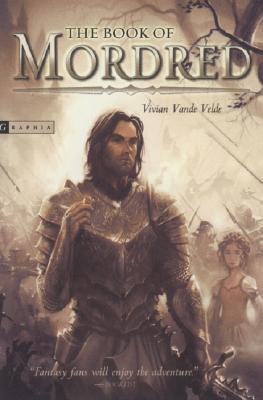
In the same week that I read The Wind in the Willows, I also read a book by Vivian Vande Velde. This book has been in my stacks for at least a year and a half. I'd bought it on sale, because it was a Velde book - and Velde is awesome! - and also because it was Arthurian mythology. No ordinary Arthurian mythology, but about a villain. Yes, VVV wrote a book called The Book of Mordred.


Awesome! I'm into the whole uncovering-the-person-behind-the-villain craze - I was more excited about Maleficent than most tween girls, I'd wager - and while Mordred was written before it all really got into mainstream swing, it still counts.

Unfortunately, Mordred didn't pull me in. A lot of it was that Mordred was barely in Mordred at all. For all it's a book about telling Mordred's side of the story - which I desperately wanted to hear - Velde focused more on the three women who were telling snippets of Mordred's life.

Look... there are some things that a good author should not do to their readers when they've promised them a story about someone like Mordred. One of those things, at the very top of the list, is to sideline the promised character to allow three unrelated characters - two-thirds of them original characters! - the chance to... if not shine, then at least try to. It's not fair to the reader.

I mean, sure, Mordred was cool. Great. Cute, apparently. Okay. He also had some issues with his parentage. Understandable. But this is The Book of Mordred. I want to know him! I want to get into his head. Not three random women's heads. (Okay, Nimue isn't random. But she's not all that connected to Mordred. Why?)

Maybe I wouldn't have minded that much if the three MCs had been more interesting. Alas. Alayna is boring, with no depth or endearing qualities to make me glad that I was in her head instead of Mordred's. Nimue is a little more interesting, but Mordred only comes into her story when it's over halfway through, and she's not that interesting. Keira is that "spunky young female protagonist" that litters this kind of literature - in other words, she's dead boring.

Also, what happened to Velde's writing? She writes so well in other books (Well-Timed Enchantment, anyone?). But her prose her was stiff and just as numbing as her protagonists.

All in all, a disappointment. I'm sad now.

June 19, 2015

6/18/15 - A Trilogy

If you've known me long enough to have a conversation about literary disappoints, you've probably heard about Jason Lethcoe and his series, The Misadventures of Benjamin Bartholomew Piff. I found the first two books when I was about... eleven? The third came out when I was twelve, and I devoured it. It ended on a huge cliffhanger - a game-changer, for sure - and I waited with bated breath for the fourth book, Wish You Were Here.

I kept waiting. Eventually I had to breathe, but my metaphorical breath was still pent up.

I waited years.

It was a traumatic experience. I wasn't into Firefly soon enough to feel the sting of betrayal and unjust cancellation, but I can sympathize, because a series is sort of like a TV show, and my series was cruelly cut off.

This isn't about Benjamin Piff, but it is about Lethcoe. I finally let Lethcoe back into my life after he hurt me (probably unintentionally, I don't blame him). This time it was the mercifully completed series, The Mysterious Mr. Spines.


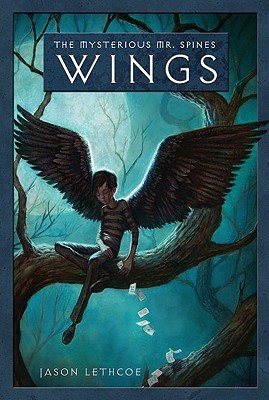
The Mysterious Mr. Spine's first book, Wings (not to be confused with Aprilynne Pike's awful anorexic plant-fairy story), was pretty similar to Benjamin Piff, to be honest: Edward McLeod is orphaned when his mother dies, and he's in a horrid orphanage, though this is in the 20s. There's an itch between his shoulders that he can't scratch. Meanwhile, a handful of magical people are searching for him - some who are benevolent, like Mr. Spines, a strange little spiked man, and some who aren't so benevolent, like Scruggs, a demonic whip-wielding "man." In the course of the very short book, Edward discovers the hard way that the itch in his shoulders is where his wings are growing.

I'll be frank - it's not the best writing on earth. (It's not as good as Benjamin Piff - but then, I'm biased.) The concept is not totally original but still untrod enough to be interesting: Mr. Spines and his apprentices are Guardians who "fell" from the "Higher Places." Yes, it's basically about Milton's angels and Dante's levels of heaven. The original faller was the Jackal, who busted up the bridges to the seven heavenly levels as he fell, and now the Guardians are awaiting the prophesied Builder, to fix the bridges and let them back up into the worlds.

Not much of this happens in Wings. It's mostly leadup into the next book - it deals with Edward growing his wings, meeting the Guardians, and finding out about the conflict between the Groundlings (fallen, corrupted Guardians) and the good guys. Also about Edward's mother, who was a glorious warrior against the Jackal before she died, and some unsubtle hinting about her relationship with Mr. Spines. Mostly, Edward runs and freaks out about the guys chasing him.

The highlight of the book is at the end, in the Woodbine (first level of Heaven), where all the dead mortals are stuck with the bridges broken. Edward ends up there and is rescued by Jack the Faun and a little man with big hairy feet called Tollers. LETHCOE, I SEE WHAT YOU DID THERE.


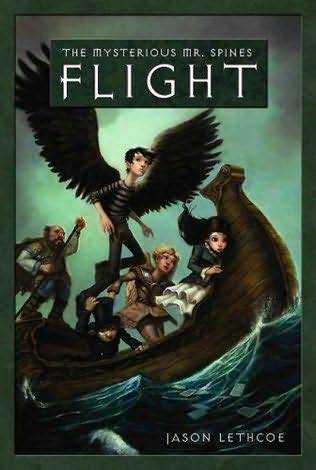
Flight picks up about where Wings left off. Edward is in the Woodbine with his allies, trying to figure out what to do next.

Honestly, I expected more. These books are too short for anything nonessential to happen, but it feels like 80% of the book is filled with nonessentials. There's a lot of talk about the Bridges and the Jackal and the Builder, and getting Edward's mother back, but there's not a lot of doing about those things. Like Wings, a lot of it is taken up with running away from the bad guys, and Edward Eragoning it up when he miraculously uses a Word of Power he discovered through - luck? - that's too powerful for his strength.

This is, of course, the book where the familial relationships are cleared up. For some reason, there's not a lot of emotional fallout. There is a pretty sad moment when Edward loses a dear possession, but it's not... heartbreaking. Like I said, the book is just too short and shallow to really dive into the implications. I get that it's a middle-grade book, but I've read plenty of middle-grade books that really punched me in the gut. I don't get that from Flight.

But for those of you who were skeptical about coincidences surrounding the names and species of Jack the Faun and Tollers, the "supplemental materials" at the end of this book is a treatise on Mr. Spine's fall from the Higher Places, written by Jack the Faun. His full name? Jack C. Staples. YEAH YEAH YEAH.


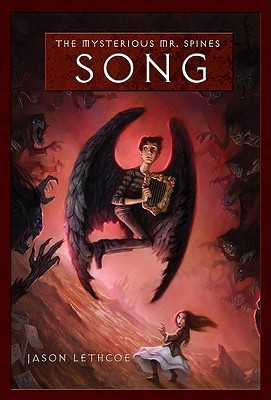
Song finishes the story with a resounding... deus ex machina.

At least in the third and final book, we get a little action towards fulfilling the goals that have been in place since Chapter 2 or 3 of the first book. There's the assault on the Jackal's fortress with some questionable choice of companionship, and there are, to be fair, some pretty good scenes between Edward and Lucy, Jack the Faun's niece. Their little thing is pretty cute.

Edward's relationship with Mr. Spines is underwhelming. At first, Edward harbors some understandable resentment towards Mr. Spines, and it makes some amount of sense; it's not the best-written resentment, but it's still good. Then he does a 180, and his opinion of Mr. Spines just... miraculously clears. The end of the story would have been more poignant if the emotions had been more complex - and again, middle-grade fiction is not exempt from emotional complexity!

It ends with one of the most egregious uses of deus ex machina that I've ever read, which is sad because there was plenty of room to build up to this ending - so many ways to fix it so it would have felt organic, and not just an easy out. It made me sad. Lethcoe can do better than this.

It's a very short series - I probably read each one in about an hour or so - and if you have to choose between The Mysterious Mr. Spines and, say, Fallen, please go for Mr. Spines. At least there's Jack the Faun to chuckle over, and the Guardian world is really pretty interesting. (Not to mention Tabitha, a young Guardian who sort of reminds me visually of Pearl from Steven Universe, if Pearl had wings.) Lethcoe writes amusing supplemental material.

I don't know. I'm sorry, Lethcoe; it's not you, it's me.

6/3/15 - A Book Over 100 Years Old

I come to you bearing news of a story that most of us have probably only experienced through film: The Wind in the Willows, by Kenneth Grahame, published in 1908, which gives me just enough room to review it for the Book Over 100 Years Old challenge.


(Isn't that the most adorable cover? I want this edition.)

Like I said, most of us, at least the 'us' who are around my age, are probably more familiar with Ratty and Toad and Mole through the Disney double-feature, Ichabod and Mr. Toad. It's a wonderful little movie. I also saw some animated version of the whole book when I was very young, but it scared the crap out of me. Too realistic. I'd probably enjoy it now because it seemed more faithful to the book, which, as it turns out, is precious.

Wind&Willows is very much a product of its time. If you've never read any novels from around the turn of the century, this is a good one to start with. It's got animals doing human things (around and with humans, no less!) like a children's story, but it's also got some pretty beautiful scenes. The chapter entitled "Piper at the Gates of Dawn" is especially attention-grabbing. 

It's an easy book to read because it's so... well, charming. It's got a bit of everything. How do you not like a book where a Toad drives a motorcar like a maniac? Where, interspersed with Toad's drama, is an episodic unfolding of the idyllic life of a Mole and a Water Rat's friendship? What about a reenactment of Odysseus's return and subsequent routing of the suitors - when Odysseus is actually a delinquent and very naughty Toad?

Meanwhile, under the shenanigans and weasel-beating and the occasional comedy of animal manners, Grahame has a few nuggets of thought to pass on to the reader. What's the meaning of home? When's the time to leave home and when's the time to stay? How do nature and civilization play together? They're never stated outright, but the undercurrents of conflict and questioning are there. It's enhanced by the playfulness of the rest of the story. Somehow, these subtexts are easier to take - they're even lovely - when it's a Water Rat pondering them.

But on the whole, Wind&Willows is a delightful, lighthearted romp through some river country in England, played out by sophisticated animals who may sometimes have too much fun with motorcars and riverboats. 

June 1, 2015

5/28/15 - March Book


Three months late, I finally manage to find a decent-sounding book published in March by - as per the new rules of the Monthly Debut Challenge - an author I've never read. We'll see if we can get something for April and May eventually.

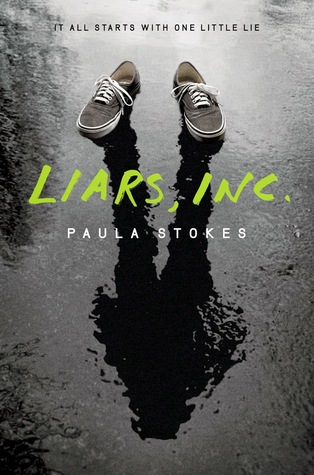
Let's just hope that it's better than Liars, Inc., though, because Liars was a pretty underwhelming offering.

Basically, what happens is that three kids decide that making a profit on lying for their school's high schooled population - forging signatures and such, ensuring that their generation of horny teenagers sleeps with enough of each other so that they won't be a laughingstock for the whole remaining six months of their high school existences - is a really good idea! Except one of the members, the son of a senator, soon vanishes, and because apparently the stupidity of the whole Lying At School, Inc. has rubbed off on the main character, Max Cantrell, he decides to lie to the FBI - the FBI - when they ask if Max knows what happened.

When your MC lies to the FBI because he thinks it might piss off his friend, you know that your MC has some priority issues. Or the story does.

After the painfully bad choice - I mean, this is an agonizingly misjudged, dude-decides-to-hit-himself-between-the-legs-with-a-baseball-bat-painful kind of choice - Max continues to make even worse choices! Running from the FBI? Check. Running from the FBI after firing at them even though you are totally innocent? Check. Trusting the shady privately-employed mercenaries instead of the FBI? Check, check. Max and his Mary Sue girlfriend, Parvati, are idiots. Idiots. As much as I applaud the attempt at adding a little diversity, all Parvati's biracial inheritance supplies is a lot of talk about almond-shaped eyes, ink-black hair, white saris, and a little guilt on this reviewer's part for criticizing her. Parvati is still a Mary Sue.

There's also the general shoddiness of the story. Nothing hangs together well - not the beginning, which is the only part which actually includes the titular organization, and certainly not the ending, which had me physically rolling my eyes. I won't spoil anyone who wants to read this for themselves, but... dear Lord. It was, in all honesty, awful.

If you must read a March 2015 book, go for another one. You're not missing anything, giving this one a pass.

5/26/15 - A Pulitzer Prize-winning Book


Can you believe that this is my first Toni Morrison book? And I call myself an English major.

Beloved is, unexpectedly for me, a ghost story. I never thought that was the kind of thing that Toni Morrison wrote. Then again, I was never really sure what Toni Morrison wrote, which says more about my sad lack of awareness than anything else. Still, that sad lack of awareness made for a very powerful, attention-grabbing experience with Beloved.

I said in my brief Goodreads review that I'm not sure if this is the kind of book that's appropriate to say you liked. How do you 'like' a book like Beloved? Does that mean you like books about racial violence, about the murder of children, about fragments of a fragment of a culture? Don't get me wrong - this is a good book. Beloved is a great book. Sethe is a modern-day mythic heroine somewhere on the level of Antigone or Penelope, while she at the same time is one of the most truly human protagonists I've ever read. The other characters, while never reaching Sethe's transcendent level, are engaging, mesmerizing in their strength and fragility: Denver, Paul D, Beloved of course, and the others.

But what these characters go through, and knowing how much of their story comes from history, makes it impossible to say that I like this book. It might be different if it were a speculative story, if the torture and the dehumanization were tools for the story goal to be pursued and gained, tools for character development. But this is a story about the slavery, the torture and the dehumanization, and while it is also about the people who struggled against and occasionally overcame that, it makes it difficult to really assess my reaction to it.

So I think the best way to assess my reaction to it is to take myself out of the equation completely and deal with the book itself. Beloved is a good book; it's a great book, about a worthwhile subject, told in the most masterfully controlled and yet rightly out-of-control emotion and passion of any author. Read it. It's difficult, but read it.

5/19/15 - A Book Written By Someone Under 30


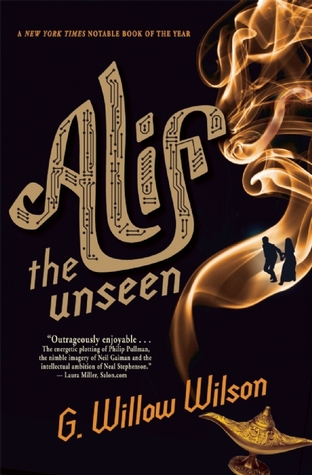
This is the book I finished on the airplane ride home from Paris! I would say it has good associations now, but that was a nightmare of a homecoming, so... there are no good associations. Except for the delicious bagel I got the morning of the second day of flying, and even that is clouded over by the fact that the airport milk I got was bad... so disappointing. Thankfully, Alif the Unseen, the book for the Book Written By Someone Under 30 challenge, is good enough to provide plenty of good associations on its own.

Go read the Goodreads snippet, if you don't already know what the gist of the story is. Because I, for sure, cannot sum it up myself in a way that would do it any justice. Middle Eastern unrest, a clever yet impossibly lame hacker for an MC, something like One Thousand and One Nights, actual jinn and their supernatural habitat, the mingling of technology and magic! Not to mention fantastically drawn characters! What is there not to love about this story?

I gave it a solid 4.5 on Goodreads, which echoes another recent 4.5 - A Darker Shade of Magic. The two stories give me a lot of the same feelings - there wasn't the emotional depth that would have otherwise catapulted these two books into a full 5 stars, but they have everything else. The writing is not flowery or purple, but it's beautiful, expressive and magical without sacrificing coherency; the characters flow over their stereotypes to become heroes you really, really root for; both authors excel at mingling magic with a sense of the Real World. 

Alif comes with the added bonus of truly beautiful musings on religion. The religion of choice is, of course, Islam; however, like any story with a decent perspective on religion, there are moments specifically for adherents of Islam (a lot rests on the translation, or inability thereof, of the Qu'ran) and there are moments for everyone who believes in a higher spiritual power or deity. And what beautiful moments Wilson gives. They made my brain purr.

This is an adult book (often classified, mistakenly, as YA) and for that reason I would warn younger/more sensitive readers of some brief sensual scenes and strong language, but, seriously, if there's any chance of you not being disturbed by these things, read this book. If there's any more adulty book that you read, it should be this one.