Showing posts with label next year's words. Show all posts

December 3, 2015

Stardate: This Is Fine -- A Book With A One-Word Title

I love graphic novels. I love graphic novels with cute art, snappy dialogue, and a great visual concept.


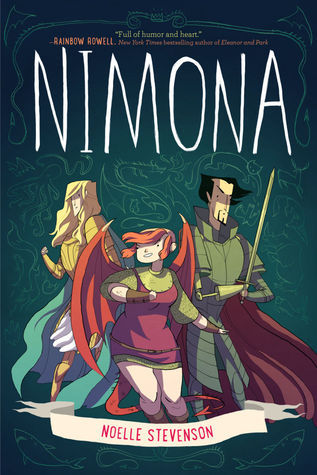
 I freaking love Nimona.
Nimona was apparently a webcomic before it was published into the book form that I found at the library and proceeded to read and then hug for a few hours after it was done. So maybe some of you are familiar with it. And you can cry with me over this graphic novel and how perfect it is.

Nimona is a shapeshifter. Ballister is a super villain. Nimona wants to be Ballister's sidekick. Ballister doesn't want a sidekick. He gets a sidekick anyway, who is sometimes, pointedly, a shark. And a fun-tastic time was had by all, except probably Ambrosius Goldenloin, who was cursed from birth not to have a good time because he'll always have that last name.

Noelle Stevenson is a genius with her art. It's simple and cute, and it'll have you rolling in stitches, but then it'll suddenly, treacherously fill up with this straightforward, heart-rending pathos, and you'll find your soul crying softly along with your eyes. The world - a sort of fantasy world with modern tech, a genius move - is perfectly suited to this style. "Sometimes loads of fun, sometimes numbingly tragic" could be the slogan for every part of Nimona.

It's really the relationships that make this story, though. The Nimona/Ballister dynamic is the centerpiece, and it's perfect - actually perfect. Ballister is the grumpy supervillain you always love to love, because they actually have a center of melted chocolate and broken promises, and Nimona... well, Nimona's characterization has to be seen to be believed. They work together with all the bickering and suppressed emotion that you could want.

I won't even get into Ballister and Ambrosius, and Ballister's backstory. And Nimona's backstory! And Ambrosious's role throughout the story as the designated hero! It's all ridiculously clever and surprisingly heavy for such a cutesy art style and I really don't want to review too much, just in case it takes anything away.

If you like graphic novels and great writing, read Nimona. You won't regret it.

Stardate: Comfortably Numb -- A Book With A Color In The Title

I saw the cover on the "New Arrivals" shelf at the library. I had to have it - that cover! Surely the story inside wouldn't be as beautiful as this Book With A Color In (Or As) The Title.


Would you believe that Vermillion actually is as awesome as that cover? Stop. Just look at it. Go to the Goodreads or Amazon page and look at it in full screen. Just look for a while.

Once you're done, you can rest assured in the knowledge that this book is as amazing as the cover. That dusky, starry, hand-scrawled feeling? Yeah, it's all there.

Vermillion is a sort of alternate-history kind of affair, a Western steampunk with added ghost-hunting and talking bears. It's got all manner of gender-bending excitement and understated romance, for one thing, all of which is almost flawlessly integrated into the actual, really exciting plot. Racial tensions, too? Yep. Flawless. Does the book actually get around to storytelling with all this diversity that Tanzer is throwing around? You'd better believe it.

Though all of that is present in Vermillion, the story and characters are always front and center. How's this for a hook: Lou Merriwether, a Chinese Stetson-wearing ghost-hunter, goes out west to find out why Chinese workers keep dying when they go to work at a mysterious sanatorium that claims to have the Fountain of Youth. Interested yet? If you're not, then you shouldn't read the book, because this is exactly the story you get, with an added metric crapton of character development and growth.

Lou is a fantastic main, for one thing. She's hardbitten and tough, but it's not that annoying kind of "I'm a Tough Girl (TM)" that gets thrown around. She's actually tough, but she's actually human, and these two things create conflict sometimes - but it also helps her get things done. She gets things done really well, too. She's sometimes hilarious and sometimes heartbreaking, but almost always 100% awesome.

This world is so fun, too! Tanzer incorporates Chinese ghost stories and creatures, which is especially fascinating for a story set in the 1800s. I'm still not sure why there are talking bears, but I just rolled with it, and it wasn't a big deal. And there are vampires, too. Probably some other creatures, but I forget just now.

It's an adult novel, so there are some adult themes. But if you're comfortable with that, and you need some rollicking Western steampunk with a great female lead? Vermillion is the book with a color in the title that you really, really need. Then you can sit with me in my prayer circle for a sequel.

Stardate: I Can Do This -- A Classic Romance

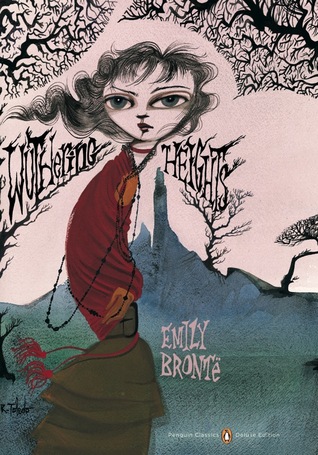
Some long years back, when I was around twelve or thirteen, I went on an airplane trip to Philadelphia. It was my first airplane ride ever. At the airport, I got the only book that didn't look scarily modern. I think I knew it was A Classic Romance, which was a draw, but, for some reason, I never read it.


It's probably good that I didn't, because Wuthering Heights is a complicated mess of terrible people and terrible actions, and I'm not sure if I would have understood it then. Maybe I would have, but I'm glad I didn't. 

I want to suggest that I might have fallen in love with Heathcliff, but I think even me at thirteen would have known better. Heathcliff is a creepy, creepy man.

From watching the Merle Oberon/Laurence Olivier movie, I thought I knew what the story was about. Little did I know that it was even more horrible than the movie! Like, ten times worse than the movie! How about that. It's true: everyone is terrible. Heathcliff is awful - at first, understandably so, but then he just goes off the rails and it's pathetic and a bit scary. (When did people start romanticizing him? I can understand some characters, but Heathcliff? His sad backstory is not nearly sad enough to warrant his later behavior.) Edgar? Kind of pathetic, but sweet... but also still a little creepy. Isabelle? Terrible. Joseph? TERRIBLE. Nelly is the only decent person in this novel, and even she has her moments of questionableness.
I had a whole essay on Cathy. Unfortunately, it's been a while since I read this (in August, ha) and I've forgotten most of it. Suffice it to say, Cathy is the most complex character in the novel, and while I still think she's an awful person - an awful, manipulative, petulant, selfish person - I also think there's a lot to explain it, more so than there is for Heathcliff. Cathy is a tragic figure, wild and untaught, and, ultimately, even if she sort of deserves what she gets, we still feel sad. Because she also sort of didn't.

All those names and family connections were a monster to get through, let me tell you. My southern skills at family trees should have made it easier, but it was really rough in the beginning. No one is judging if you have to map it out for yourself to remember, especially when children start getting named after the previous generation.

Is it worth it, for all the awfulness and the tangle of names? Absolutely. Brontë's language is intricate and descriptive, as plaintive and as wild as her most famous character. You'll be in for the long haul for this lengthy, dense book, but it's worth it. It's definitely worth it.

(If you don't put "Wuthering Heights" on after you finish this book, either the original Kate Bush version or a cover - my favorite is Hayley Westenra's - I will judge you. Hard.)

Stardate: I'm Okay, You're Okay -- A Book I Started But Never Finished

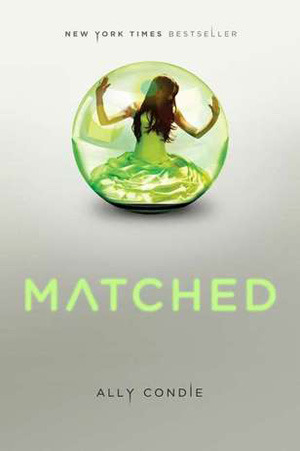
After The Hunger Games, I tried to do the whole "dystopian about a white girl who's special" thing that went around for a while like a weak, sniffelly cold. I remember picking up Matched after reading some great 2-star reviews, and being unable to get past fifty pages or so. This time, I was ready - ready to laugh, ready to tear things apart, ready to hammer another nail into YA dystopia's coffin.


It didn't work.

I mean, in my defense, it's not like it's my new favorite book or anything. I'm not going to go out of my way to defend Matched.

But I gave it three stars, which is more than I expected. Maybe it's because the last dystopia I read was Divergent, which I hated with most of the larger bones in my body. But that was a while back. Maybe it's because green is my favorite color.

Maybe because Ally Condie took a lackluster concept, gave it some lackluster prose and characterization, and somehow managed to... interest me?

Looking back, I'm not sure what I saw in Matched. It was entertaining. Moderately so, but still! Entertaining! 

This is what I said in my Goodreads review:

Things that both Matched and Divergent have (as most YA dystopias do):
--Incredibly flimsy "dystopian" government systems--Questionable writing styles/techniques--Way too many Capitalized Nouns 
What Matched does that Divergent doesn't, however, is have a heroine who isn't a ragefest of hypocrisy, bad decisions, and inconsistent behavior. Not saying that Cassia is a well-written heroine or anything - she's no Katniss. Just saying that, if there were a Battle of Tolerable Personality, Cassia would win, just for being bland and occasionally decent, as opposed to Tris and her gasket-blowing idiocy. 

And it's true. She wasn't dumb! I don't remember ever really getting angry at Cassia, either for a decision she made or because of something she thought. It could be because she's just a little bit too white-bread, but still - not being gif-inducingly stupid is a huge plus for me in the YA dystopian area. (And... if we're being honest... I really liked Ky. Xander was incredibly boring, but Ky was a sweetie. I like that guy. And I worry about him.)

Like I said, the world of Matched is ridiculous, ill-founded, and poorly supported by actual human nature. Most of them are. And seriously, can we get one dystopia that doesn't Capitalize all Important Nouns or sometimes Verbs? But if we're comparing - which isn't nice, but sometimes one has to, when they're deciding what to get at the library or bookstore - Matched is better than a few options I could mention. Not better than Hunger Games, but better than some others. That's about as good as I think we're getting for a while.

Stardate: My Wrist Hurts -- A Book A Friend Recommended

Over this summer, during the week of my birthday, I got a visit from one of my very best friends in the world. This friend had Recommended A Book long ages ago, and just prior to this visit, I had ordered the book. During the visit, I read the book. I'm very glad, but also a little unhappy, because ouch.


Teeth has teeth. Teeth in its prose, in its characterization, in its plot twists, in the way it bites your heart in half. It's that kind of book.

I can't figure out where to start. What about the characters? The characters who are desperately real, even though Mostkowitz's prose is that kind of pseudo magical realism that I tend to despise? They all have their own voices, their own stories, their own struggles, their own way of hurting you. Rudy? I frickin' loved the kid. Teeth? Let me take him home and care for him and help him. Diana? What a fascinating girl; I wish she'd had more page time, maybe her own novel. Rudy's relationship with his family is so important to the novel, too; it's not as important as that between Rudy and Teeth, but it's never shoved to the side. It's part of the situation and part of the conflict, and it's done incredibly.

The concept is as mythical as this gray, windy, stormy novel deserves. An island full of fish that magically make a sick person better? Well, why the heck not? Teeth isn't marketed as a modern-day fairytale, but it should be, because that's exactly the vibe that I get. A bloody, mature fairytale. (Could you find this in the YA section? Beware, because language and themes of sexual abuse abound.) A quasi-love story, the magic of the earth and of love. I'm speaking in metaphors because it's hard to talk about this book straight (haha) - it just sort of slips out of your hands. Like a little silver fish.

As much as her characters hurt me, I think it's Moskowitz's atmosphere that sticks with me most. How she maintains this consistency with the feeling of the island - the wind, the gray, the clouds, the thunderous ocean, the rocks, the sea spray, the cold sand, the dark, the damp - it's beautiful in a brutal way, and it's impossible not to remember it and to feel it. The screaming that she describes... haunting. Haunting, that's the right word.

Can you handle swearing and more mature subject content in your mermaid tales? Please read Teeth. It's worth the bite.

Stardate: Third Time's the Charm -- A Book Published This Year

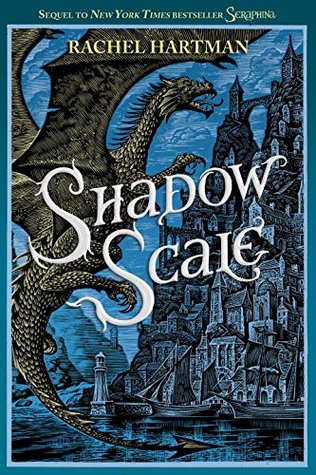
While I had that little side challenge going with a newly-published book every month, I needed to save something special for this category. Something that I knew I'd love. Something like the sequel to Rachel Hartman's incredible debut Seraphina. 


Seraphina ended satisfactorily, but with plenty of room to expand, to take the story further, to press the boundaries of Hartman's lovely worldbuilding and character development. That's exactly what Shadow Scale did.

Seraphina and Co. travel a lot in Shadow Scale. It's not a boring story, though; Hartman knows how to use judiciously the "so we rode for a month and ended up dirty and hungry in an inn somewhere" trick of all fantasy writers everywhere. But she also sprinkles the travels with their own significances, something that keeps the book rolling at a quick but never hurried pace.

The mythology deepens beautifully in Shadow Scale, shedding light on dragons but also even more on the half-dragons that Seraphina knows exists with her. I absolutely love the half-dragons, by the way, and how they work. No half-dragon is the same, and some are humanoid while some are... well. I suggest reading. But they're all their own persons, and the journey to meet them was so much fun! Hartman manages to characterize these minor half-dragons, significant points in this particular story but rarely given so much space, briefly and potently so that you remember them all in between interacting with them again.

Speaking of deepening mythology - the religious system of Seraphina's world expands, too. Did it expand. Hartman gives  hints about what's going on, but it takes you the whole book to really get the whole picture. And the whole picture is amazing. I won't spoil a thing, because the way it's written is just really, really cool.

As I admitted in a previous review, I'm a character person, but the worldbuilding that went into Seraphina/Shadow Scale is mind-boggling. It might not be as detailed as some - stand down, LOTR fans, I know you're slavering at the jaws now - but Hartman gives the reader a spectacular feeling of realism that you just can't shake. Everything is consistent and lifelike, and all the senses are engaged. Taste? Smell? Sight? Feeling? Sound? All of them! Her style is amazing and I'm always a little bit jealous when I think about it.

While the ending was a bit rushed - a little more explanation and set-up would have been nice - I'm glad to say that Seraphina had a great conclusion in Shadow Scale. Rachel Hartman is a genuine talent and I can't wait to see what she does next.

Stardate: It's Not So Bad Yet -- A Book I Actually Did Read In School (And Many Times After)

Hey, guys. It's time for me to make an insufferable confession. I read every single book I was supposed to read in school. It's true. I'm an arrogant little nerd driven by perfectionism and a slightly obsessive need for completion. However, this is not to say that I enjoyed all or even most of them. Sadly, I hated most of them, or at least resented them for not being much fun. There is one, though, a Book That I Actually Did Read For School and have since come back to over and over and over.


Cyrano de Bergerac is a masterpiece. I really approach this review with fear and trembling because, of all books, Cyrano deserves a great review.

Cyrano de Bergerac, the character, is a magnetic character, a wonderful person who is simultaneously a fascinating, flawed character. How often do you see a character who is both good in the moral and the technical sense? I can probably count them on my fingers. He's brave, generous, selfless, loving, prideful, reckless, brilliant, melodramatic - and we can never forget his inferiority complex the size of France. I've read a couple translations of Cyrano at this point, and none of them ever disappoint in capturing Cyrano's voice, his mesmerizing, enchanting, blood-pounding voice. I don't think you can ruin Cyrano. He's too strong a presence for that.

The story is simple, straightforward - ugly boy loves a beautiful girl, beautiful girl loves a beautiful boy, ugly boy helps beautiful but rather slow boy woo the beautiful girl, girl and boy marry, ugly boy is, as usual, the dream wingman but ultimately left alone, romantically speaking. And then a bit more, but in case no one's read it yet, I won't say anymore.

I see a lot of people insulting Roxanne and Christian, but stop! Don't do that! Let the characters breathe. See them as people. Roxanne isn't vapid, shallow, selfish - she's a girl in love, a girl who also loves her cousin. Cyrano hides his love well! She couldn't know. She has beautiful lines, and she's no doormat love interest. That scene where she rides into the soldiers' camp to bring them food and cheer? She's incredible! And Christian - poor Christian. Maybe his speeches pale in comparison to Cyrano making up and reciting an impromptu poem at a stubborn actor, but stop comparing him. Listen to how honest he is. Do you ever doubt that he truly loves Roxanne? I can't. He's too straightforward, too sincere. And he's a sweetheart, and brave in his own way. (Also, the utter hilarity of his 'nose' scene when Cyrano's trying to tell a story. What a kid.)

The less we say about the final scene, the better. I don't have enough kleenex on hand to take care of the soppy, teary mess I'll become.

Cyrano de Bergerac is the kind of literature I'd call a gateway drug. Want to get someone into the classics? Bypass the 400-page Dickens and Austen novels, put down the Faulkner and - yes, though my heart breaks - even the Shakespeare. Give someone Cyrano (probably the Penguin edition - great readability). It's simple, brief, and beautiful - utterly beautiful. 

June 1, 2015

5/28/15 - March Book


Three months late, I finally manage to find a decent-sounding book published in March by - as per the new rules of the Monthly Debut Challenge - an author I've never read. We'll see if we can get something for April and May eventually.

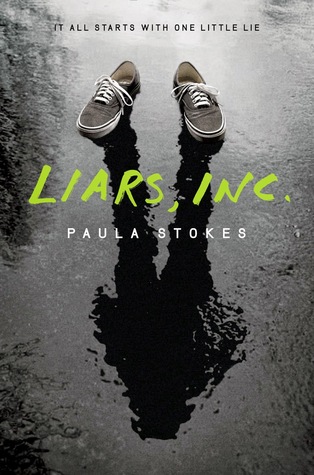
Let's just hope that it's better than Liars, Inc., though, because Liars was a pretty underwhelming offering.

Basically, what happens is that three kids decide that making a profit on lying for their school's high schooled population - forging signatures and such, ensuring that their generation of horny teenagers sleeps with enough of each other so that they won't be a laughingstock for the whole remaining six months of their high school existences - is a really good idea! Except one of the members, the son of a senator, soon vanishes, and because apparently the stupidity of the whole Lying At School, Inc. has rubbed off on the main character, Max Cantrell, he decides to lie to the FBI - the FBI - when they ask if Max knows what happened.

When your MC lies to the FBI because he thinks it might piss off his friend, you know that your MC has some priority issues. Or the story does.

After the painfully bad choice - I mean, this is an agonizingly misjudged, dude-decides-to-hit-himself-between-the-legs-with-a-baseball-bat-painful kind of choice - Max continues to make even worse choices! Running from the FBI? Check. Running from the FBI after firing at them even though you are totally innocent? Check. Trusting the shady privately-employed mercenaries instead of the FBI? Check, check. Max and his Mary Sue girlfriend, Parvati, are idiots. Idiots. As much as I applaud the attempt at adding a little diversity, all Parvati's biracial inheritance supplies is a lot of talk about almond-shaped eyes, ink-black hair, white saris, and a little guilt on this reviewer's part for criticizing her. Parvati is still a Mary Sue.

There's also the general shoddiness of the story. Nothing hangs together well - not the beginning, which is the only part which actually includes the titular organization, and certainly not the ending, which had me physically rolling my eyes. I won't spoil anyone who wants to read this for themselves, but... dear Lord. It was, in all honesty, awful.

If you must read a March 2015 book, go for another one. You're not missing anything, giving this one a pass.

5/19/15 - A Book Written By Someone Under 30


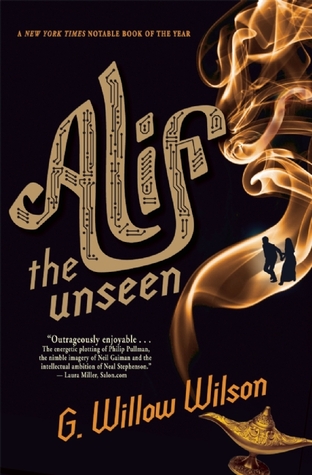
This is the book I finished on the airplane ride home from Paris! I would say it has good associations now, but that was a nightmare of a homecoming, so... there are no good associations. Except for the delicious bagel I got the morning of the second day of flying, and even that is clouded over by the fact that the airport milk I got was bad... so disappointing. Thankfully, Alif the Unseen, the book for the Book Written By Someone Under 30 challenge, is good enough to provide plenty of good associations on its own.

Go read the Goodreads snippet, if you don't already know what the gist of the story is. Because I, for sure, cannot sum it up myself in a way that would do it any justice. Middle Eastern unrest, a clever yet impossibly lame hacker for an MC, something like One Thousand and One Nights, actual jinn and their supernatural habitat, the mingling of technology and magic! Not to mention fantastically drawn characters! What is there not to love about this story?

I gave it a solid 4.5 on Goodreads, which echoes another recent 4.5 - A Darker Shade of Magic. The two stories give me a lot of the same feelings - there wasn't the emotional depth that would have otherwise catapulted these two books into a full 5 stars, but they have everything else. The writing is not flowery or purple, but it's beautiful, expressive and magical without sacrificing coherency; the characters flow over their stereotypes to become heroes you really, really root for; both authors excel at mingling magic with a sense of the Real World. 

Alif comes with the added bonus of truly beautiful musings on religion. The religion of choice is, of course, Islam; however, like any story with a decent perspective on religion, there are moments specifically for adherents of Islam (a lot rests on the translation, or inability thereof, of the Qu'ran) and there are moments for everyone who believes in a higher spiritual power or deity. And what beautiful moments Wilson gives. They made my brain purr.

This is an adult book (often classified, mistakenly, as YA) and for that reason I would warn younger/more sensitive readers of some brief sensual scenes and strong language, but, seriously, if there's any chance of you not being disturbed by these things, read this book. If there's any more adulty book that you read, it should be this one. 

May 28, 2015

5/5/15 - An Author I Love


Jodi Lynn Anderson is the kind of author that I trust. While she has never done anything truly mindblowing on the level of, say, Markus Zusak, she writes well and consistently. My personal favorites were her middle-grade May Bird series, but there was also Tiger Lily which I have wanted to reread almost since I finished reading it the first time.

May Bird being other-world fantasy, and Tiger Lily being glorified Peter Pan fanfiction, these of Anderson's offerings made me used to her fantastical side. Peaches takes up on the more realistic side, though the peach orchard that the novel's three protagonists - Leeda, Birdie, and Murphy - inhabit for a while might be more magical than even Neverland. 

From the very first page, it's made apparent that Peaches is a novel for a slightly older teenage audience. The situations are more mature, but more than that, Anderson's style is more mature. It's solid and dependable with just the sweetest, slightest hint of magic - a lot like the story itself. Her characters are... they're basically flawless. I went from feeling meh about all three of them to rooting for them to live together forever, on the peach orchard, happily ever after, please.

It wasn't quite that simple, of course, but I still loved where the story went. It was meandering but not pointless, a little circumstantial but never in a way that made me want to suspend my suspension of disbelief. Anderson executed a balancing act that deserves applause and frequent return trips. And there are sequels!

4/29/15 - A Play/A Book That Made Me Cry


The reading history log for the last week or so of April and the first week or so of May is... patchy, to say the least. Sometimes I never even finished filling in my reading goals for the week all the way. The 23-29 week of April only has three books in it, and only two of those were read. Fortunately, those two were Challenge entries!

I used up another easy out that week - A Play. Plays are incredibly short, they should be easy to understand, and did I mention that they're short? Not to mention that The Children's Hour by Lillian Hellman was made into a movie starring Audrey Hepburn. My favorite actress ever. So I'd been meaning to read this one for a while.

The gist of the play is that a boarding-school brat starts a rumor that her two headmistresses are engaged in lesbian activity. In the... 40s? As you can imagine, it's not a happy play. 

It's an engaging one, though. The characters owned their voices, and while it takes a little while to distinguish the generic WWII women's names in your head, you get there eventually. It helps that Hellman manages suspense and especially dialogue really, really well. You love who you're supposed to love and you hate who you're supposed to hate, with equal and opposite passions. 

It makes the ending worse, being so fond of the characters. The whole play is suffused with a sort of sadness - which makes sense; it's a suitable sadness, which still doesn't take away from the effect it's supposed to have. 

Not a play for everyone - the ending is deeply disturbing - but a good one. If you can handle it, I'd recommend it. I know, now that it's been a few weeks, that I'm ready to watch the Hepburn movie.


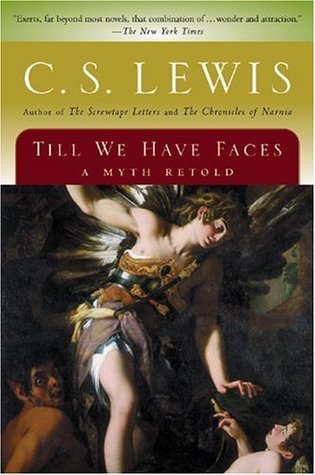
And we have A Book That Made Me Cry. Is it cliché that this is one of my very favorite novels - possibly my favorite standalone story? If it is, I don't care. Faces is worth it.

If you don't know the story of Till We Have Faces, don't read a summary. Just go get it and read it. Don't even glance at the back blurb. Just read it. All you need to know is what's on the front cover: there is a lot about faces, it's a myth retelling, and C.S. Lewis wrote it.

But this is not the Lewis of Narnia; this is not the Lewis of Screwtape; this is not the Lewis of radio broadcasts about Christianity. This is a wholly separate Lewis, approaching the divine with nearer a divine sense than Aslan got in all seven books. (Not to disparage Narnia; I, like almost every other homeschooler, have a deep sycophantic love for Narnia. But Faces is different.)

Do you like flawlessly, lovingly crafted and handled female protagonists? Do you like tangles upon tangles of emotional, spiritual, and religious questions, woven and punched together until the mass is almost too heavy for your heart to bear? Do you like having your carefully cradled beliefs and notions about gods and humans pierced by arrow after unerring arrow of honesty and doubt? Do you like knowing that the divine is unknowable and that the fault is not in our stars but in our unimaginable smallness and unimportance? Do you like being told that despite our unimaginable smallness and unimportance that something too big for us to ever comprehend exists for us and watches over us in our unimaginable lives?

If so, read Till We Have Faces. If not, read Till We Have Faces. There's something unspeakably freeing about having your insignificance articulated in this way. It's cathartic. I recommend Faces every six months to deconstruct any sense of pride or bigness that you might think about cultivating - in case you make Orual's mistake of writing a book.

April 30, 2015

4/22/15 - A Book Based On Its Cover

I'm using up all of my "get out of limbo free" cards, but this one was definitely worth more than the last one!


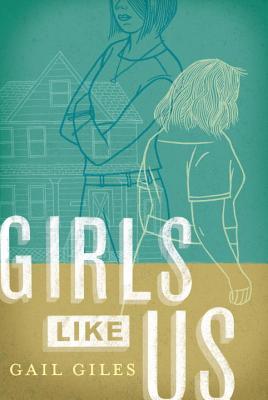
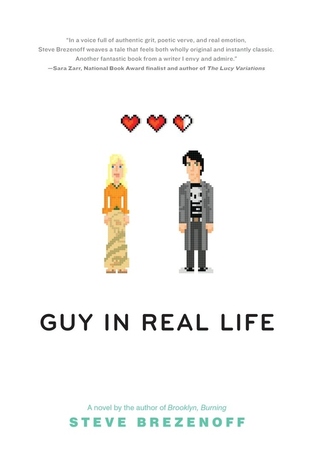
Girls Like Us was more of a wild card than Guy In Real Life. The cover isn't that descriptive, and neither is the title. I'm still trying to figure out why I picked it up. Maybe because it was small.

It is a short, tidy little book that I read in a little over an hour, all told. It is not a tidy story, as I found out, and as you can find out with a quick glance at its Goodreads description.

Quincy and Biddy are both graduates of their high school’s special ed program, but they couldn’t be more different: suspicious Quincy faces the world with her fists up, while gentle Biddy is frightened to step outside her front door. When they’re thrown together as roommates in their first "real world" apartment, it initially seems to be an uneasy fit. But as Biddy’s past resurfaces and Quincy faces a harrowing experience that no one should have to go through alone, the two of them realize that they might have more in common than they thought — and more important, that they might be able to help each other move forward.

I've never had experience with the kind of situation that Giles describes from the perspectives of Biddy and Quincy, and I don't know of any first- or secondhand knowledge that Giles might have, so I don't know how much justice she does to this kind of story. But from a purely storytelling perspective, Giles does not do too badly. There's an interesting tension between the two leads, and there are enough divergences from cliche that made me keep reading when I might have gotten bored instead. There are plenty of conversations that highlight all sorts of social issues - race, class, education, even a couple gender conversations. Nothing felt overly heavy-handed (a little bit, but not overly), and the characters are well-drawn enough to make the conversations unbiased.

What isn't balanced or well-drawn is Giles's attempts at writing voice. As other reviewers have noted, Biddy and Quincy have almost exactly the same voice, especially at the beginning, when readers have to distinguish two first-person perspectives right off the bat. It's not just that they have the same sort of thoughts, it's that they have almost the same accents. Maybe that's how it works in Texas, but it seems unlikely. It's jarring sometimes and I often had to check back to chapter headings multiple times to remember who was talking.

Another warning: there are pretty intense and explicit descriptions of and conversations about rape/sexual abuse. Seriously. Young readers and people sensitive to this should probably not read Girls Like Us.

Flaws taken into account, I did enjoy Girls Like Us. It was, for all its bleak situations and character development, an oddly charming little story about three women coming together as the kind of family they need. I do recommend it, with significant reservations.

4/15/15 - An Author I've Never Read

Let's do the catch-up game one more time...


One admission out of the way: I am not a gamer. I am also not a not-gamer. I like games like some people like The Golden Girls. They're fun and have a limitless short-time obsession factor, but I'm not selling my soul to them, nor am I going to spend a lot of time on them after a month or two. Or money.

So this was a bit out of my range of experience. These aren't even my kinds of games - I'm an uber-lite gameplayer, along the lines of Zelda and Sonic. I've never played an MMORPG (unless DragonFable counts?) and I've always been terrified at the idea of participating in a game like D&D - too much passion and movement, too few guidelines. I like Mario Kart, where you have a designated track which you have to make your way around a set amount of times with what comes down ultimately as the most superior sense of efficiency. It's great. But I digress.

Actually, that's a sign. I'm way more into talking about how Mario Kart is exactly my type of game than I'm into talking about the book I'm supposed to be reviewing. It's not that Guy In Real Life is a bad book, per se. It's just... not a good one, either.

It's the classic story of "a guy and a girl from two very different lifestyles have a meet-cute(-but-awkward-too) and then end up falling in love through various quirky incidents that shift up and down the scale of believability." It's so classic that I was bored. It's a constant set-up of "obstacle - obstacle hurdled" repeated until the book ends, with a bizarre obstacle that was basically every 90s/early 2000s parent's worst chatroom nightmare.

Boy has a weird, not-very-friendly friend who's super into something the way Boy is into Girl? Check. Girl has a cast of cardboard, often pointless friends who don't like Boy? Check. Girl has another suitor who goes toe-to-toe with Boy? Check. It's all so generic. While Svetlana did have something of a unique voice, she came off a lot as obnoxious rather than individualistic, and I don't even know what was going on with Lesh.

I'm bored just talking about it. It's not as much rage-fuel as a John Green book but that just makes it drab to talk about. Two stars, find some other, actually quirky contemporary teen romance.

April 8, 2015

4/8/15 - A Memoir

This review is actually for last week's book, which I didn't get to because of extenuating circumstances. And that's my excuse for not having a review for this week - homework. Forgive me. Just when I was caught up, right? Oh, well. Summer break is coming.

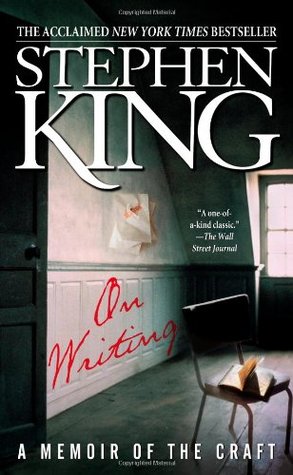
But last week, I was successful, with both completing the book and enjoying it. Behold: my review of the inimitable Stephen King's On Writing.


Before I dive into the review, I should admit that I have only read one piece of King fiction before, and that's not even one of his horror ones: it was The Dark Tower, which I enjoyed greatly despite being really confused. I've read more Stephen Lawhead than Stephen King - perhaps a crime, perhaps not.

But I am a huge fan of King himself, and his attitude towards writing. He's hilarious, for one thing - don't let the horror thing scare you away. He's a witty guy. I had to put the book down a couple times to laugh (the poison ivy, oh my gosh).

But more than that, he's experienced. He's got a lot of disappointment and success and years under his belt. It doesn't matter that I don't gel with 100% of his opinions on writing and the writing process; I still have to respect them, because he has for sure been doing something right. He doesn't command respect, but you can't help but give it to him, reading this book.
He's also genuine. Any writer that doesn't let you in on the hardships that come with fiction-writing are selling you something, and King never does this. He's truthful, and his transparency makes this easy to read, both physically and spiritually, if that makes sense.

If you're a writer, please read this (unless language really bothers you/would distract from his message). Just to know the experiences of an author who's more experienced than 95% of us writers-to-be ever will. And if you're not a writer, why not read it anyway? It's relatively brief, and if you want some King context, it'll be fun. I don't know any reason (besides the language, for my more sensitive audiences) why I wouldn't recommend this to anyone. 

March 22, 2015

3/18/15 - Based On/Turned Into A TV Show, and the February Book

I made up for last week by reading not one but two Challenge book! One for the 2015 Challenge, and one for the New Book Every Month thing. I present: A Book Based On or Turned Into a TV Show, and a Book Published In February 2015!


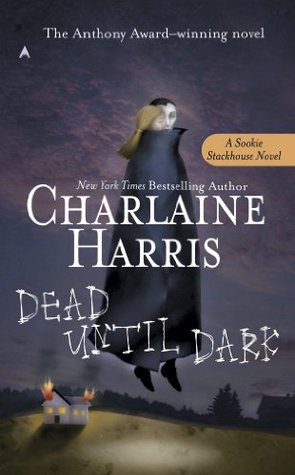
Dead Until Dark has always sounded sort of like a bridge between the less-modern classics of Anne Rice and the super-modern classics of Twilight. Less class than the former, but still more than the latter - you know what I mean?

And though I've not yet read any Anne Rice (it's on my list), I can definitely say that it did have a bit more - not much, but more - than Twilight. For one thing, it's set in Louisiana! The south! My homeland! Sort of. Not really, but close enough for the setting to feel real familiar. 

Though this only ended up with three stars on my Goodreads account, I can say that it was a high 3. Maybe somewhere like a 3.5? Mostly because of sheer comparative value. Sookie is, compared with 99% of the paranormal heroines I've read about, is an incredible person. Almost every situation that your average contemporary YA heroine is faced with is in this book, and Sookie pretty much turns every cliché response on its head and actually is... really, really intelligent, most of the way through. At least in comparison to most vampire lovers. AND THERE IS AN ACTUAL PLOT WITH ACTUAL CONFLICT. I almost cried when I realized that what we had here was an honest-to-gosh problem and real live issues instead of some cockamamie fabricated bullcrap. It was beautiful.

Does all this have something to do with the fact that this is adult fiction written about a decade ago and not current YA? Probably. Does this mean that the reason I really appreciate this book is probably not quite valid? Almost certainly. Does it make me like Sookie Stackhouse any less, or make me want to read the next books any less? Frick no. I'm on the Sookie bandwagon at this point. Bring on the rational decision-making and the Honest-to-Gosh Conflict.

Note: Dead Until Dark is an adult book and I would not recommend it to any younger readers who would be sensitive to adult content/a bit of adult language.


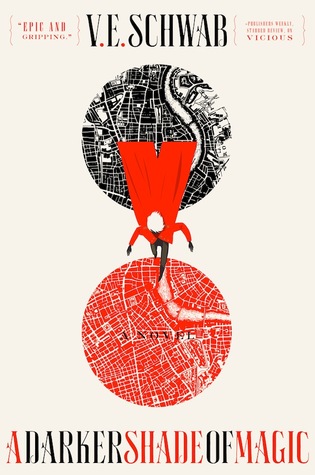
For the February Book, I managed to snag A Darker Shade of Magic, and it is absolutely one of the best decisions I've made this year in regards to reading.

A Darker Shade of Magic splits the difference perfectly between old and new, unique and timeless. There are original systems of magic, and there's the plucky streetwise girl-thief who wants to become a pirate. (She is, however, a wonderful character, not at all like her description makes her out to be, and I liked her almost as much as the male MC.) There are also some pretty despicable but interesting villains, as well as relationships that are frankly beautiful and I hope dearly that they get some fleshing out in the continuing books.

One of the greatest things about A Darker Shade of Magic is the fabulous pacing. Schwab can write very well but she also structures this book intelligently: it's broken up into almost 20 different "parts," with relatively short chapters between them. Like I said in my Goodreads review, it's like Max Ride with quality - it's a normal-sized book for adult fic, but the short chapters and parts make the story whizz by, especially aided by the fantastic pacing outside the technical structure.

A Darker Shade of Magic is a huge success. Please go out and read it right now.

Note: This is also an adult book and while there are not as many adult situations there is still a bit of adult language. Not that much, though. Three or four instances.

February 24, 2015

2/24/15 - A Funny Book

And we come to the last week of February, and wrap up with a very weighty, very academic choice for the category of A Funny Book.


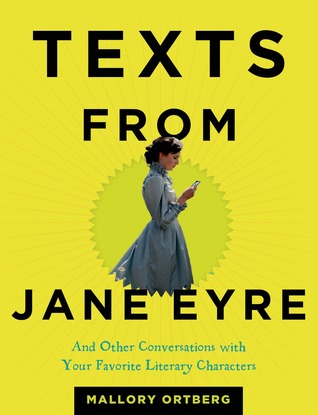
Texts From Jane Eyre, by Mallory Ortberg, was yet another coincidental find. This isn't a book, per se - it does exactly what the title says. It presents texts from various characters from famous literature. One of the very best examples is Medea's texts to Jason's new wife ("it's Glauce right?? that is such a pretty name I am so crazy about how pretty your name is 'Jason and Glauce' sounds so good together").

Ortberg runs the gamut of fictional characters, from Gilgamesh to The Hunger Games. It's sort of like a collection of short stories, in that there are some amazing ones (Achilles!) and some good ones (Gone With The Wind) and some eh ones (Agatha Christie). I can easily say, however, that the amazing ones make up for the eh ones. I must have read the Achilles, Medea, and Coleridge texts at least ten times each, and almost cried over them every time. 

It's pretty modern humor, and the method of humor doesn't really change - the syntax of what makes the first few texts funny is pretty much what makes all of the others funny, so if you want your favorite authors' voices over-adapted into humor, this probably isn't your book (except for maybe "The Love Song of J. Alfred Prufrock"). But the method works, really really well. Especially if you're in-tune with the kind of passive-aggressive humor that Tumblr specializes in.

Get it from the library. I dare you to read Achilles's text in public and keep a straight or at least an un-embarrassing face.

2/11/15 - Graphic Novel

As the title says, this week I read a book for the challenge of Graphic Novel! The book chosen was Jerusalem, by Guy Delisle.


I am a huge fan of graphic novels, and when I saw this sizable little book with the simple, rather quirky artwork, and set in Jerusalem, no less, I was really excited! To see Jerusalem through a visual medium, experience complex and controversial culture, maybe get some insight into the city's religions--

It wasn't... quite what I expected. Or wanted, really.

I can't quite put my finger on what I didn't like about it. Maybe it was just... too simple, though that's what was attractive about it at first. It's very centered on the author's experience of Jerusalem, rather than on Jerusalem itself. And you get the feeling that Delisle didn't actually have that much respect for Jerusalem itself. 

Most of the panels were taken up with a vague feeling of judgment, or disapproval, or disrespect, or flat-out annoyance. It was distracting, and it made the whole progression of the slice-of-life story feel uncomfortable. Almost as if Delisle was taking out his frustrations with the difficult situations in Jerusalem on his portrayal of the city.

There were some good panels, of course, and it's not like Delisle is a bad artist. It's just that he's not a fantastic one, and that coupled with an uncertain attitude about his city-subject made Jerusalem a lot less impactful than I had hoped it would be.

Note: Jerusalem was originally published in French under the title Chroniques de Jérusalem.

2/4/15 - Nonfiction / January Book

(Lets pretend that I haven't missed nearly a month of reviews, shall we?)

In the last week of January, I said that I had two books for my challenge: Unapologetic by Francis Spufford, going under the Nonfiction slot, and The Sweetheart by Angelina Mirabella, for my January Debut book. I have good news and bad news and ish news. I finished Unapologetic for that week and it was pretty good! Bad news is that I did not get through The Sweetheart, instead putting it on my DNF list. The ish news is that I read my January debut book after all, even though the author has been published before.

But first, Unapologetic.


This book was written by a British chap a few years back, and its subtitle is Why, Despite Everything, Christianity Can Still Make Surprising Emotional Sense. Christianity is, if Spufford is anyone to believe, very different across the pond, and so some of what he says about the American church would probably badly offend a good portion of us over here. Still, the meat of what Spufford says carries out the stated message of the subtitle fairly eloquently (though with a lot of F-bombs - something that I'm sure we'd also get our feathers ruffled for.)

Nevertheless, Spufford has a strong sense of self-awareness, and I think that's a valuable commodity that a lot of the American Protestant church lacks. But he never lets up on the utter respect and awe of God, which makes for a realistic yet deeply spiritual little book that I desperately need for my shelf.

9/10 would recommend to anyone interested in Christianity and what it means and how it works emotionally.

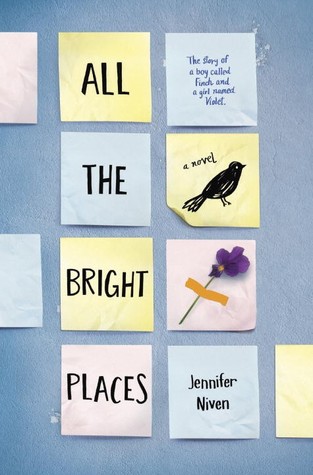
And now, onto my January Debut book: All The Bright Places, by Jennifer Niven.


If you're anywhere on Goodreads or probably any of the other various online book catalogue systems, you've probably seen this. It's not the kind of book I usually go for. It's got JUST LIKE JOHN GREEN! JOHN GREEN STYLE! BASICALLY THE NEW FAULT IN OUR STARS! DID WE MENTION JOHN GREEN!-esque marketing, an immediate turn-off. I'm not a John Green fan (Paper Towns and Looking For Alaska can both be found on my the-stupid-it-burns GR bookshelves). Not to mention this just isn't my genre. And it's got such a hipster title. 

To be honest, I don't know why I put this on hold at the library. Maybe because I just couldn't get past The Sweetheart's length and its second-person POV, and this was the only January release-date book that the library had that looked any good.

I'm really glad I picked it up.

I can see the appeal for John Green fans. It's that kind of book. But it's not John Green, and it garnered five stars from me. The funny thing is that a lot of people hate it for the same reasons that I tend to hate John Green books (except for TFiOS, I liked that one moderately). This means that I am, in all likelihood, a hypocrite. But moving on to All The Bright Places! (Ugh. I can't get over that title still.)

It's a suicide book, like TFiOS was a cancer book (so if that's a touchy subject for you, please stop reading). Unlike cancer, suicide is kind of a topic I know a bit about, at least from the inside out. I've never been affected by losing someone to it, thank God. So the stuff that Violet and Finch go through - mostly Violet, though Finch to some degree, too - is a subject pretty close to me. Maybe that made me blind to whatever unapologetic [see what I did there] pretentiousness it has, but even if it didn't, it made me connect with this story to a degree that I don't think I ever have in a "real-life" sort of book.

I will admit that the ending had the kind of dragging, emotionally exploitative ending that I loathed in Looking For Alaska. I stuck out this one because I actually loved both Violet and Finch, and, while a little bit trivializing, this one had more punch. And it was worth it at the end.

Reading some of the more negative reviews, I find I can't argue with most of them. Especially when I say the exact same things about John Green! It's a very frustrating position to be in, forced to see myself as the curmudgeonly, spiritually-fifty-four-years-old fun-sucker that I am, hating on young cancer love and dead author quoting. (At least Niven had the decency to force her characters to Google Virginia Woolf quotes to keep up their facade, for gosh sakes.) 

However, there is one area I want to defend ATBP on: the idea that it gives no hope for kids who are suicidal. I saw at least one reviewer who said something to this effect. While no one person is the same, I can't say that I found this true for me. I wouldn't go shoving this book into every suicidal or borderline kid's hands, because it made me feel a lot of things and not all of them were positive, and it might be too much for some. Still, there was hope to be found. It's called All The Bright Places for a reason. It was even, dare I say it, inspiring.

So, while I did cheat a little bit - on the first month, no less! - by not reading a true debut, I can't say that I regret the choice. ATBP is a new favorite and I need a copy as soon as possible.
January 8, 2015

The Second Week

The first week of January was massively successful, not only in my 2015 Reading Challenge. Aside from that, I also have a generic reading journal. It's a goal-keeping mechanism: for every week in which I read five books, I get to buy one full-price book. In no other case do I get to buy a full-price book (bookstore sales and used bookstores are highly discouraged; library sales are less discouraged but still frowned up). Since I started this system back in September '14, I have not been able to allow myself a full-price book.

Until the first week of January. Which I think is a pretty good omen!


(The line-up for last week, if you're interested, was Burial at Thebes by Seamus Heaney, Storm Thief by Chris Wooding, The Gates by John Connolly, Showdown by Ted Dekker, and The Bane Chronicles by Cassandra Clare et al.)

So I was able to satisfy a long-lasting lust for this book, Antigoddess by Kendare Blake. I've heard nothing but good things, Blake's writing was quite nice in Anna Dressed In Blood, and this synopsis so up my alley it might as well be the alley. So I'm excited to read this.


I have a couple items I could check off this week - nonfic, graphic novel, thriller, female author - but the one I'm going with is A Book My Mom Loves, which in this case is Goodbye, Mr. Chips by James Hilton. I have absolutely no idea what it's about, but the cover looks cute and it's pretty brief so it should be enjoyable! (My mom also says I remind her of Mr. Chips. We shall see.)

So that's the upcoming week in literature. I doubt I'll make my quota this week - first week of the spring semester and all that - but here's hoping!

Joyous Reading!

January 1, 2015

Happy New Year!

Happy New Year! We made it to 2015. Huzzah. Cheers. I spent the Eve in front of the fire with sparkling white grape juice and a short marathon of The Twilight Zone. Not bad, all things considered.

Today, however, on this most auspicious beginning to the Best Year Ever (crossed fingers), I have met the first of my Reading Challenge Goals, and I am here to tell you about it.


Title: Burial at Thebes
Author: Seamus Heaney
Challenge: A Book I Can Finish In A Day
Date: January 1, 2015

I have a very soft, squishy spot for Antigone. Two months of memorization in order to act in it should, by all accounts, have made it revolting to me. Instead, I'm a little obsessed. 

The basic story is that Antigone's two brothers have killed each other in a battle for the control over Thebes. One brother, Eteocles, was defending Thebes; Polyneices was attacking it. At their deaths, Antigone's uncle, Creon, took over; he gave Eteocles a hero's burial, but left Polyneices' carcass to the dogs. This, in Antigone's mind, goes against the laws of the gods, and she defies Creon's edict and buries her brother after all. 

It's a wonderful, terrible story, and still very relevant. Antigone is my favorite literary Greek female - she's desperate and headstrong, wild and defiant, stringently moral and deeply romantic. I don't know how you couldn't love her, and it's not too hard to understand why Haemon follows her into death. 

And it's not that Creon is a villain - it's just that he and Antigone are complete opposites in belief, while being completely alike in determination and pride. It's the most volatile of personality clashes that culminates in the most violent of body counts, on par with Hamlet and King Lear. 

Heaney's translation isn't my favorite. It's a "modern" take on Antigone, but the modernization of the text only goes so far. The sentence structure is simplified, and the word choice is simplified, and some monologues are simplified... Like I said in my Goodreads review, it feels like a simplification, rather than a modernization. There's no modern slang or diction - it doesn't read like the dialogue of today - which was what I was hoping for. Instead, the simplicity just feels stiff and uninspired.

I will say that he made an interesting choice in meter. Rather than sticking to one type of verse, Heaney adapts the verse for whoever is speaking. Antigone and Ismene begin speaking in short, three-beat lines that flow smoothly and quickly. The Chorus tends to speak in a kind of Old English verse, generally with line alliteration and a matching number of beats on each side of the caesura. Creon and Haemon speak in iambic pentameter. It's often inexact, and Antigone slips into iambic a few times, herself, but overall the effect is a good one. The Chorus never fails to sound ominous, even when their word choice is questionable. 

It got four stars from me on Goodreads, even though I wasn't a huge fan of some of his artistic choices. It's Antigone; the story is always good. It's a good choice for my first read on this first day of 2015.

Joyous Reading!